
Complete Evaluations
Evaluations are a critical step in the hiring process for stages that involve phone calls, virtual or in-person interviews, and online interview questionnaires. In Zamdit, evaluations ensure structured feedback and a comprehensive view of candidate performance. Each evaluation can include up to three sections:
- Metrics (scorecards) for structured scoring.
- Questions for detailed observations.
- Final Score and Comments to summarize the evaluation.
This guide provides best practices to help you complete evaluations effectively and consistently.
How to Conduct Interviews
Key Aspects to Consider During an Interview
When conducting an interview, prioritize the following:
- Preparation: Review the candidate’s application, résumé, and any pre-interview assessments beforehand.
- Professionalism: Maintain a friendly, respectful, and unbiased approach to foster a positive candidate experience.
- Active Listening: Focus on the candidate’s responses, ask follow-up questions, and encourage them to elaborate when necessary.
- Consistency: Use a structured set of questions to ensure fairness and make comparisons easier.
Best Practices for Successful Interviews
- Clearly explain the interview structure and duration at the start.
- Allow candidates time to answer, particularly for complex or technical questions.
- Avoid leading questions that may suggest answers.
- Take concise notes during the interview, focusing on points relevant to evaluation criteria.
Collecting Information for the Evaluation
- Document examples or evidence supporting the candidate’s performance against metrics.
- Balance feedback by noting both strengths and areas for improvement.
When to Complete the Evaluation
Complete the evaluation promptly after the interview while your impressions and notes are still fresh. Timely evaluations ensure accurate feedback and avoid missed details.
⚠️ Note
If multiple interviewers are involved in the same interview, designate one person to complete the evaluation or collaborate as a team to finalize it.
Selecting the Correct Evaluation Form
For stages involving multiple interviews, ensure you select the appropriate evaluation form:
- Click Complete Evaluation... from the Candidate Card or the Candidate Details View.
- Select the evaluation form corresponding to the specific interview.
- Complete all sections of the form before submission.
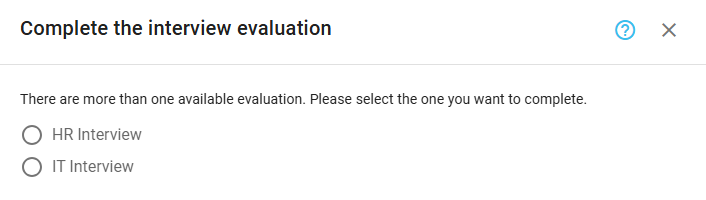
For single-interview stages or when only one evaluation remains to be completed, the form opens automatically after step 1
Scoring Metrics
Metrics (scorecards) provide a structured framework for evaluating candidates on specific criteria. Each metric uses a star rating scale from 1 to 5, with half-star increments for precision.
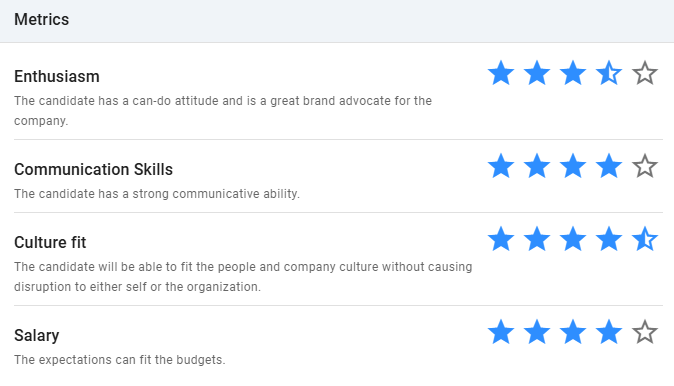
Guidelines for Scoring Metrics
- Refer to your notes and assess how well the candidate meets each metric.
- Assign scores based on evidence and observable performance.
- Use the following scale as a reference:
- 1 Star: Poor – Does not meet expectations.
- 3 Stars: Satisfactory – Meets minimum expectations with some gaps.
- 5 Stars: Excellent – Consistently exceeds expectations.
Answering Questions
For evaluations that include questions, particularly open questions:
- Provide evidence-based responses that reflect the candidate’s actual performance.
- Avoid vague statements. Instead, refer to specific examples or instances from the interview.
- Keep answers clear, concise, and directly relevant to the evaluation criteria.
Final Score and Comments
Determining the Final Score
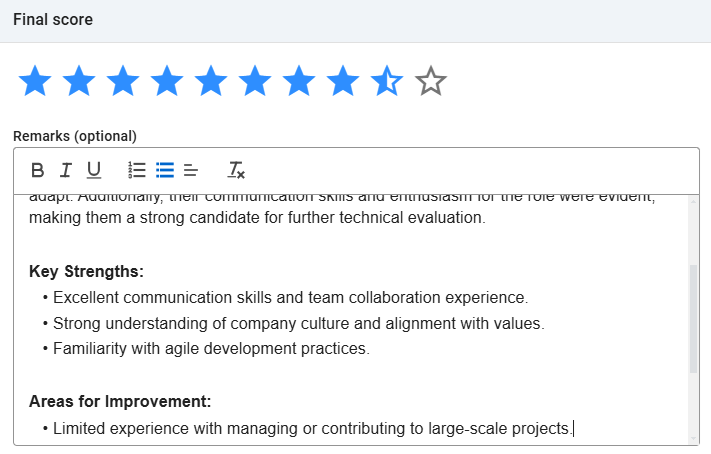
The final score provides a holistic rating out of 10, allowing half-star increments for precision. This score reflects the candidate's overall performance in the interview. When assigning the final score:
- Consider the scores for individual metrics and answers to evaluation questions.
- Balance strengths and weaknesses to assign a fair, well-rounded score.
- Use the half-star option to indicate nuanced assessments when the candidate’s performance falls between whole numbers.
Writing Effective Comments
Provide clear, actionable comments to help the hiring team make informed decisions:
- Highlight Strengths: Include examples of relevant skills, cultural fit, or strong answers.
- Address Concerns: Note any areas where the candidate may need improvement or further evaluation.
- Stay Objective: Avoid personal bias and focus on observations supported by evidence.
By following these best practices, evaluations in Zamdit become a powerful tool for structured, consistent, and fair hiring decisions.